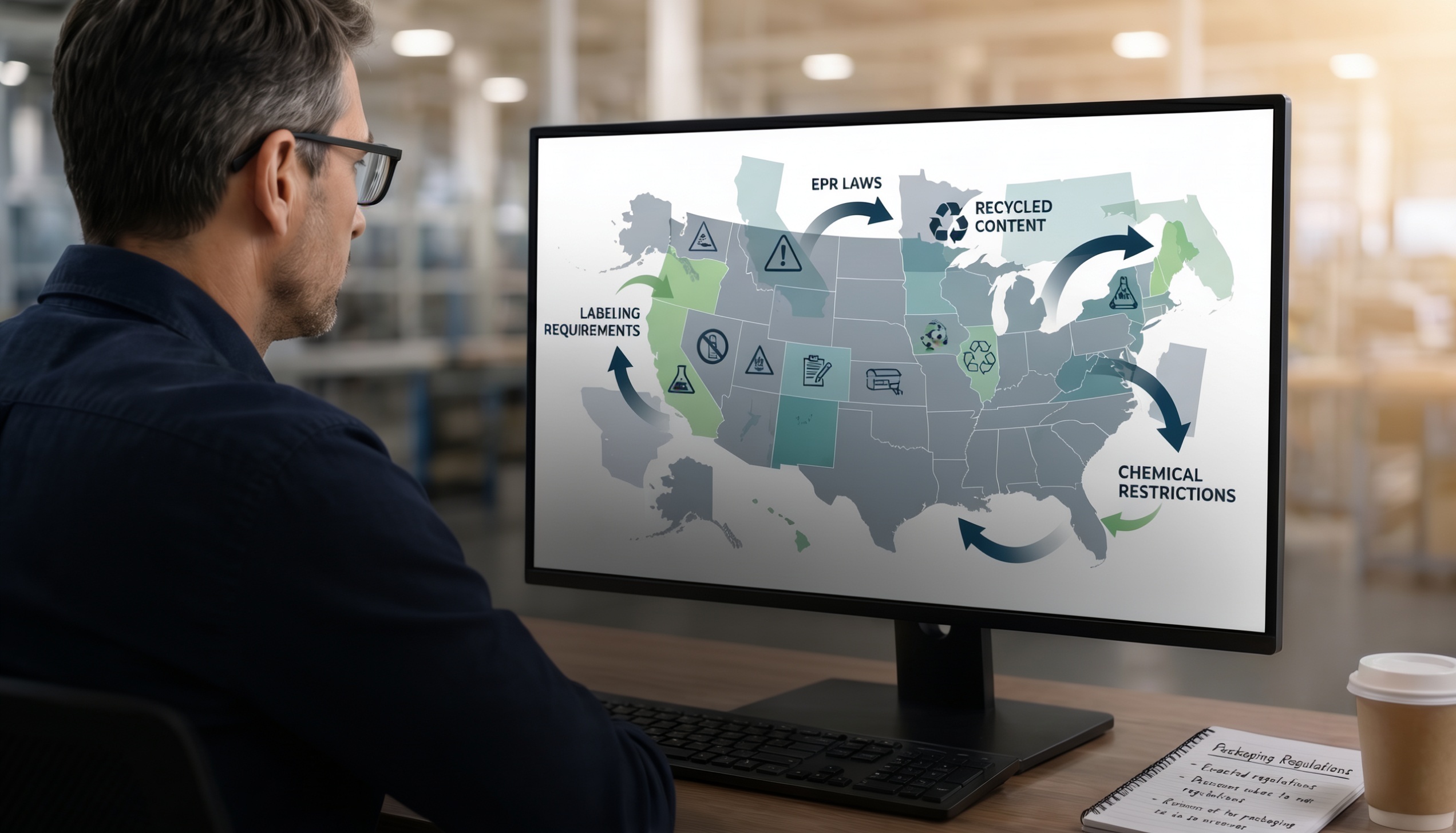
Packaging regulations are changing fast. Companies now face a growing patchwork of state-level EPR laws, recycled content mandates, labeling rules, and chemical restrictions — and the compliance landscape continues to shift year over year.
The regulatory environment surrounding plastics and packaging is evolving rapidly. From Extended Producer Responsibility (EPR) laws and recycled content mandates, to labeling requirements and chemical restrictions, companies are now navigating a growing patchwork of state-level regulations that continue to shift year over year.
As these requirements expand, packaging decisions are no longer being driven solely by cost, performance, and sustainability goals. They are also being shaped by compliance obligations, reporting requirements, material restrictions, and growing scrutiny around environmental claims.
For many organizations, this creates both a challenge and an opportunity. Done strategically, packaging can do more than protect a product. It can:
- Enhance brand experience
- Improve operational efficiency
- Support sustainability goals
- Reduce long-term compliance risk
- Strengthen supply chain resilience
- Support evolving customer expectations
And as the regulatory landscape continues to evolve, companies are increasingly reevaluating how packaging supports the broader business.
Understanding the Expanding EPR Landscape
One of the most significant regulatory developments impacting the packaging industry is the continued expansion of Extended Producer Responsibility, or EPR, laws.
EPR policies are designed to shift responsibility for the lifecycle of packaging materials onto producers, including financial responsibility for waste management and recycling programs. The broader goal is to reduce packaging waste and improve recyclability.
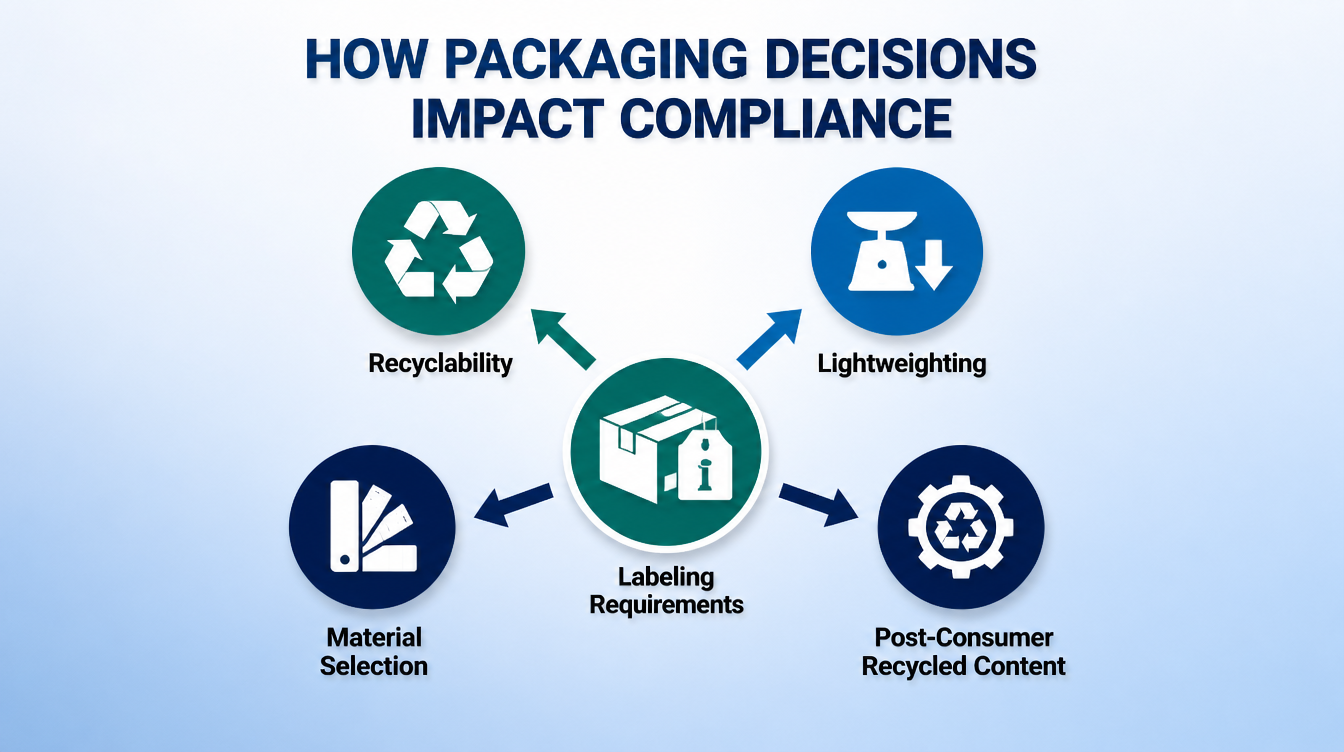
While regulatory obligations often fall on the brand owner or company placing packaging into the market, packaging decisions increasingly influence how those requirements are met. Material selection, recyclability, labeling, lightweighting strategies, and post-consumer recycled content can all affect reporting obligations, fee structures, and long-term compliance planning.
What makes the current landscape particularly complex is that requirements vary significantly by state. Different states define things like covered materials, producer obligations, reporting requirements and exemptions and fee structures differently.
States including California, Oregon, Colorado, Maine, Minnesota, Maryland, and Washington have all enacted or advanced EPR legislation, each with unique implementation timelines and compliance structures.
Packaging Design Is Becoming a Compliance Decision
As regulations evolve, packaging design decisions increasingly carry compliance implications.
Several states now have restrictions on materials used in food packaging, including PFAS and phthalates, while others have implemented minimum post-consumer recycled content requirements.
Labeling requirements are also changing. California’s SB 343 law, for example, places new restrictions on the use of recyclability claims and recycling symbols unless packaging meets specific state-defined recyclability criteria.
These developments are reshaping how companies evaluate:
- Material selection
- Lightweighting strategies
- Labeling and consumer claims
- Supply chain sourcing
- Packaging formats and components
Increasingly, packaging strategy is becoming interconnected with broader operational, sustainability, and compliance planning.
Why Flexibility and Partnership Matter
For many companies, adapting to changing regulations is not simply about checking a compliance box. It requires balancing evolving requirements with operational realities, supply continuity, sustainability goals, and customer expectations.
That makes flexibility and industry expertise increasingly important.
As a national manufacturer working with customers across multiple markets and regulatory environments, we’re able to provide visibility into how packaging requirements continue to evolve state by state. That experience allows us to help our customers navigate changing expectations while balancing compliance, operational performance, supply continuity, and sustainability goals. Packaging strategy is approached with the understanding that compliance, sustainability, operational performance, and supply continuity are increasingly interconnected.
That includes helping customers evaluate:
- Recyclability and labeling considerations
- Lightweighting opportunities
- Post-consumer resin integration
- Supply chain flexibility
- Operational impacts of packaging changes
Building a More Resilient Packaging Strategy
As the regulatory landscape continues to evolve, companies that take a proactive approach to packaging strategy will likely be better positioned to adapt.
The packaging industry is entering a period where operational performance, sustainability, and regulatory compliance are becoming more interconnected than ever before, and companies that recognize those connections early will be better equipped to manage risk, maintain flexibility, and continue delivering value in a rapidly changing environment.
*This is not legal advice and companies should consult their own advisors for support in understanding and satisfying their compliance obligations.
FAQ
As packaging regulations continue to evolve across states and product categories, companies increasingly need packaging partners that understand both the operational and regulatory sides of the business.
With a national manufacturing footprint, experience supporting customers across industries, and expertise in packaging design, recyclability, lightweighting, and post-consumer resin integration, Altium helps customers navigate changing requirements while maintaining focus on operational performance, supply continuity, and long-term packaging strategy.
Because packaging decisions increasingly affect compliance obligations, sustainability goals, transportation efficiency, labeling considerations, and overall business performance, many companies are looking for partners that can help connect those moving pieces in a practical and scalable way.
Packaging design decisions now influence compliance obligations, reporting requirements, recyclability claims, material sourcing, and operational costs, making packaging strategy more interconnected with overall business planning.
Packaging regulations are increasingly being driven at the state level, resulting in different requirements for recyclability, labeling, recycled content, reporting, and material restrictions across multiple states.
In many cases, EPR obligations fall on the brand owner or company placing products into the market. However, packaging manufacturers play an increasingly important role in helping customers navigate packaging decisions that impact compliance, recyclability, and reporting requirements.
Extended Producer Responsibility (EPR) is a policy approach that shifts responsibility for the lifecycle and waste management of packaging materials onto producers, including financial responsibility for recycling and waste programs.
For many companies, adapting to changing regulations is not simply about checking a compliance box. It requires balancing evolving requirements with operational realities, supply continuity, sustainability goals, and customer expectations.