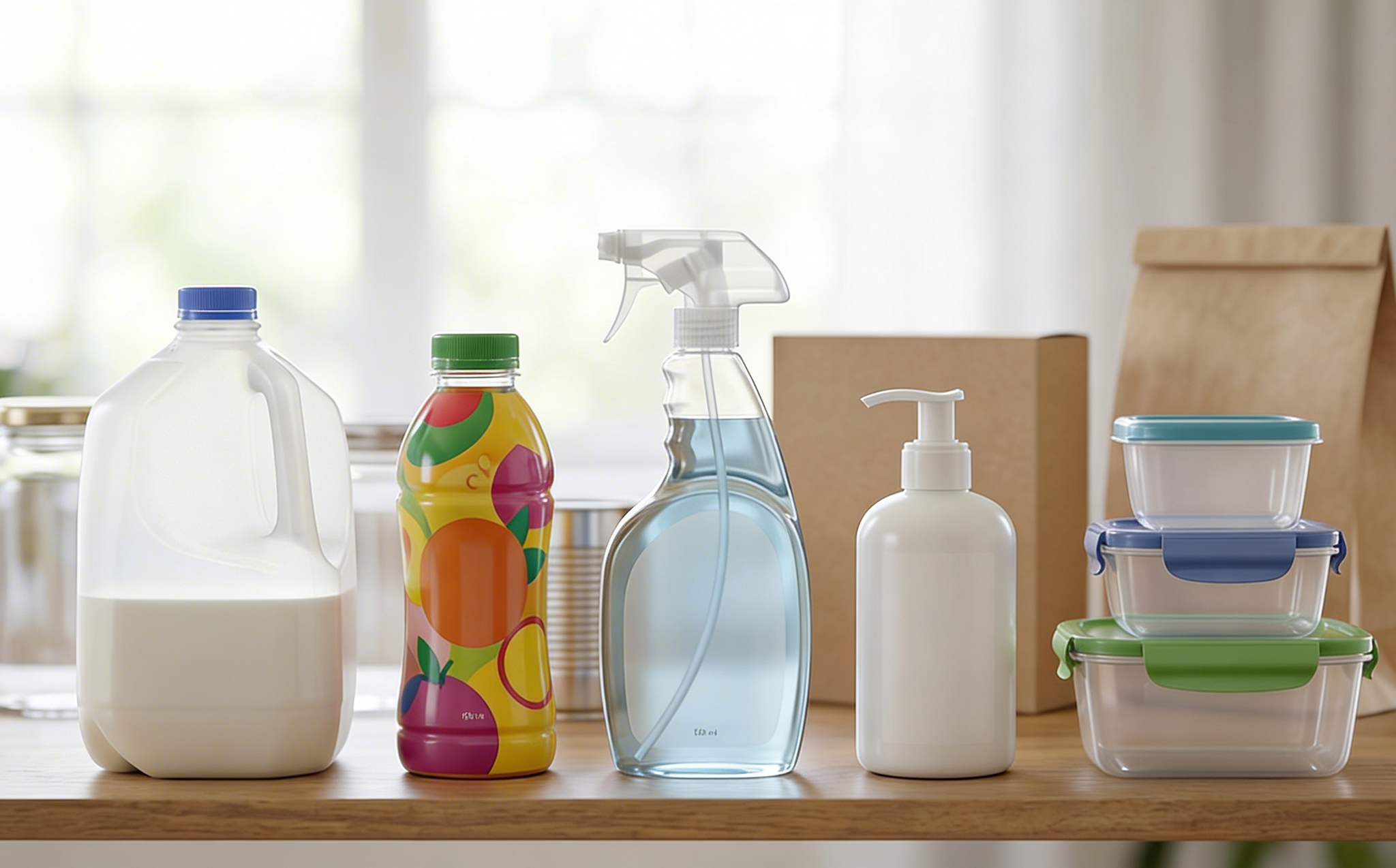
“…plastic packaging continues to provide superior life cycle environmental impact compared to alternative materials.” (McKinsey & Company, “Climate Impact of Plastics”, July 2022).
A New Era of Accountability in Plastics
Plastic is a foundation of modern life. It protects products, enables innovation, and touches the daily lives of most everyone. And perhaps surprisingly to some, plastic packaging continues to provide superior life cycle environmental impact compared to alternative materials (McKinsey & Company, “Climate Impact of Plastics”, July 2022).
According to the U.S. Packaging Recycled Content Goals Analysis (AMERIPEN, April 2025), the average post-consumer recycled (PCR) content in plastic packaging more than doubled—from 5.3% in 2019 to 10.7% in 2023 (Recycling Product News, 2025).
In an industry often criticized for waste, the plastics industry’s achievements in sustainable technology offer proof that change is not only possible, it’s already happening. This shift marks a pivotal moment for manufacturers, especially those, like Altium, who are committed to measurable sustainability performance and industry leadership.
Why Sustainability Matters in Plastics Manufacturing
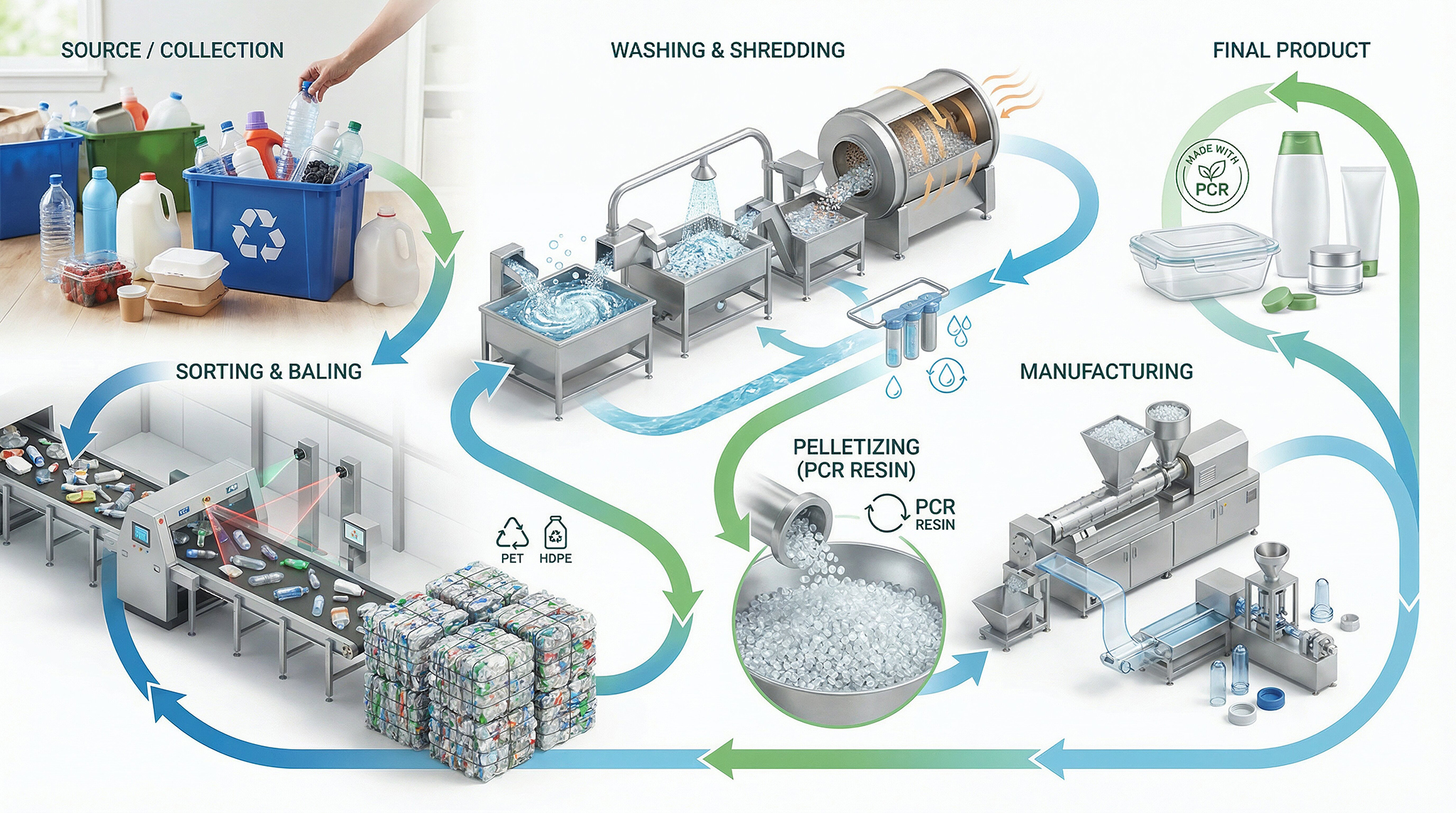
Sustainable plastics manufacturing is about rethinking material design, production, and end use to minimize waste and maximize reuse. It requires innovation at every step, from how resins are sourced and processed to how products are designed for recyclability and circularity.
With several U.S. states now requiring recycled content in packaging, the industry is responding with unprecedented investment. Recyclers have more than doubled their capacity since 2021 (Eco Plastics in Packaging, 2025). This momentum shows how policy and innovation are converging to reshape the plastics value chain, driving greater availability of high-quality post-consumer resin and encouraging manufacturers to redesign products with circular goals in mind.
Scaling this progress will require continued collaboration between resin producers, converters, brand owners, and policymakers. From expanding collection and sorting infrastructure to advancing chemical recycling technologies and harmonizing standards, the next stage of growth will depend on a shared commitment to both environmental responsibility and manufacturing excellence.
From Ambition to Action: Altium’s Green Initiatives
Altium has turned sustainability ambition into measurable results that speak for themselves.
- Altium is supporting the shift toward circular manufacturing. One recent example is Envision’s work with Nestle Purina. Envision supplies high quality PCR HDPE resin to their Missouri location, which now produces Tidy Cats cat litter jugs using 100% PCR HDPE resin. This initiative aligns with Nestle’s sustainability goals, reducing the use of virgin plastics by a third in 2025.
- 99.7% of our products are 100% recyclable. We create products that use less material while maintaining efficacy and durability. This is highlighted by our Dura-Lite® platform, which reduces resin usage, thereby also reducing carbon emissions associated with production and transportation. In fact, more than 3.3 billion Dura-Lite bottles have been shipped through Q1 2025, saving 49 million pounds of virgin plastic and reducing Carbon Monoxide emissions by 34,650 MT.
- Altium facilities have enacted a multifaceted approach reducing greenhouse gas emissions (GHG), including energy efficiency audits, energy surveys and clean energy solutions in our facilities. We also implemented a sustainability dashboard that gives us real-time insight into our energy usage.
Beyond operations, Altium focuses on ethical sourcing, education, and community recycling partnerships, building a culture of sustainability that extends beyond its facilities.
Building a Circular Future
The journey toward sustainable plastics isn’t easy, but it’s achievable when companies turn ambition into action. The AMERIPEN analysis and the work underway at Altium show that progress depends on innovation, transparency, and shared responsibility.
Altium exemplifies that leadership. Through measurable results and community engagement, it is helping redefine what’s possible for the plastics industry, proving that environmental responsibility and performance can go hand in hand.
Because at Altium, sustainability isn’t just a goal. It’s how they do business and how they’re building a cleaner, greener future for all.
Altium is helping redefine what’s possible for the plastics industry, proving that environmental responsibility and performance can go hand in hand.